
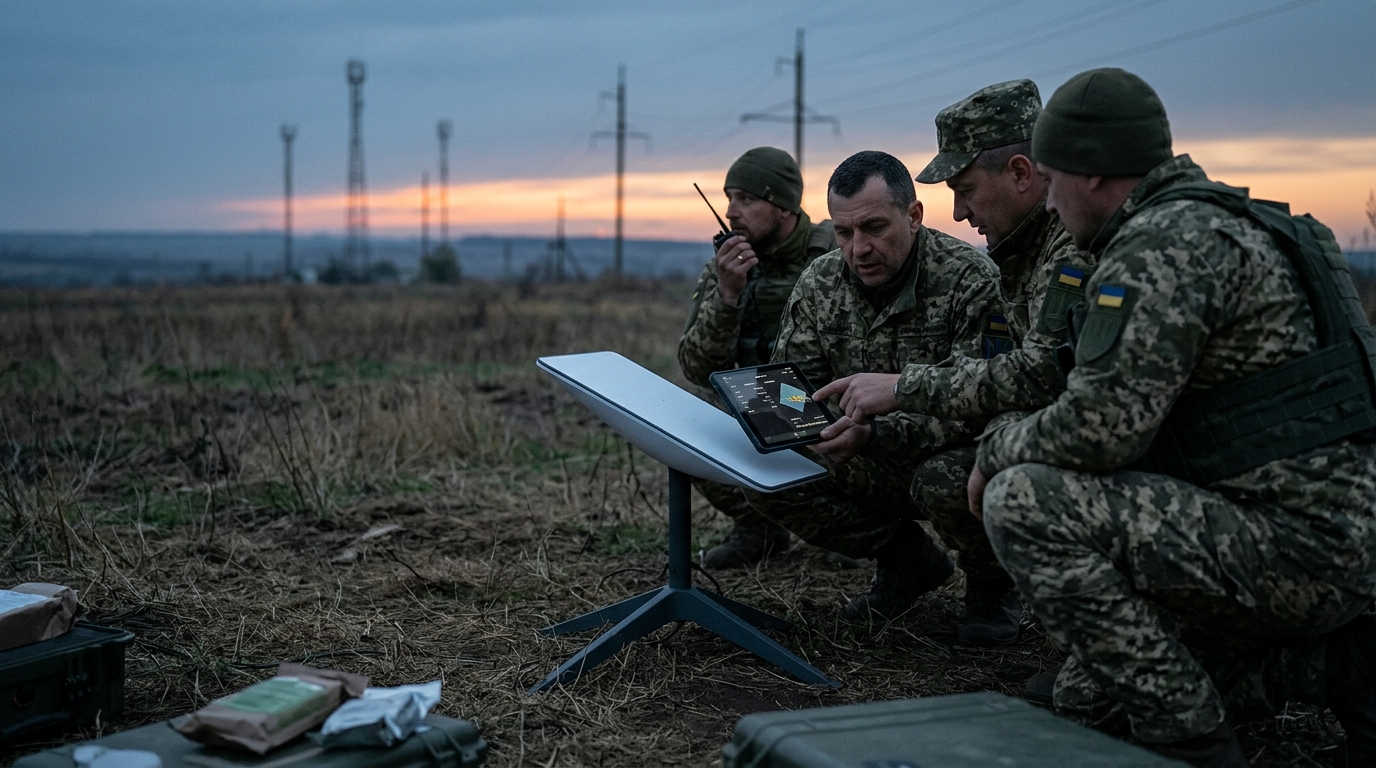
On the night of October 13, Ukrainian drone operators lost their Starlink connection mid-mission. By Wednesday morning, the reason was still disputed. An adviser to President Zelensky said that without warning, services had been limited for terminals traveling over 100 mph, effectively curtailing Ukraine’s ability to launch drones. Ukrainian forces “did not receive a warning about this limitation and this led to the disruption of several missions.”
For investors holding SpaceX’s newly listed SPCX shares or Tesla stock, the episode delivered a lesson the prospectus never spelled out: the company’s most strategically vital product can be switched off overnight, and nobody agrees who has the switch.
Elon Musk’s public response drew a sharp distinction. Starshield systems are owned and controlled by the US government, and any limits on speed or usage are up to the US military and the president. Starlink, by contrast, is a commercial service owned and controlled by SpaceX and is limited to civilian or defensive activities. That framing hands accountability upward. But the White House immediately pushed it back down. A senior Trump administration official assured Ukraine that the White House was not involved in the alleged restrictions and did not control SpaceX, while the American side said it plans to contact the company to clarify the circumstances.
So neither the government nor the company claims the decision. While Axios reported that a senior U.S. official denied White House involvement and attributed the issue to a technical glitch, Ukrainian officials remain suspicious that the limits were intentionally applied. That gap, a contested zone between a public company and its largest government customer, is precisely what long-term investors should be pricing into both SPCX and TSLA.
The Governance Problem Hidden in Plain Sight
SpaceX raised $75 billion at a roughly $1.77 trillion valuation when it listed on the Nasdaq under SPCX in June 2026, with Elon Musk retaining about 82% of voting power. That concentrated control was promoted as a feature. Tuesday’s events show the other side of it: with one founder making real-time decisions about a satellite network that underpins a war, investors own exposure to geopolitical risk that no quarterly filing adequately captures.
SPCX closed October 14 at $152.16, well below its all-time closing high of $211.39 reached on June 16. The stock has been drifting lower through October even before this week’s headlines. A service disruption that draws simultaneous denials from both Musk and the White House is not the kind of transparency public-market shareholders typically tolerate for long.
The risk compounds for Tesla holders. Tesla completed an approximately $2.00 billion investment to acquire shares of SpaceX Class A common stock on March 12, 2026, representing less than 1% of SpaceX’s Class A shares. For years, Tesla represented the only publicly traded vehicle for retail investors seeking exposure to Elon Musk’s companies, a dynamic now disrupted by SpaceX’s market debut. The result is that TSLA holders carry Starlink geopolitical risk indirectly, on top of Tesla’s own execution risk in electric vehicles and robotaxi development.
What Investors Should Take Away
This is not an argument to sell either stock. Starlink’s commercial momentum is real: SpaceX reported that Starlink added 1.7 million net subscribers in Q2 2026, an average of about 570,000 per month. That growth does not pause because of a Ukrainian dispute. But it does not cancel the governance risk either.
The standard framework for evaluating a tech company asks about competition, margins, and runway. The Starlink episode adds a fourth question: can a government customer effectively weaponize service terms, deliberately or accidentally, in a way that creates regulatory and reputational damage the company cannot control? Wednesday’s answer was yes, and neither SpaceX nor Washington knew who to call first.
Investors building a position in SPCX today are buying a commercial satellite business that is also an instrument of foreign policy, with governance concentrated in one person and accountability distributed across no one. That is not disqualifying. But it deserves an honest place in every position-sizing conversation. The Ukraine episode did not create this risk. It simply made it visible.