
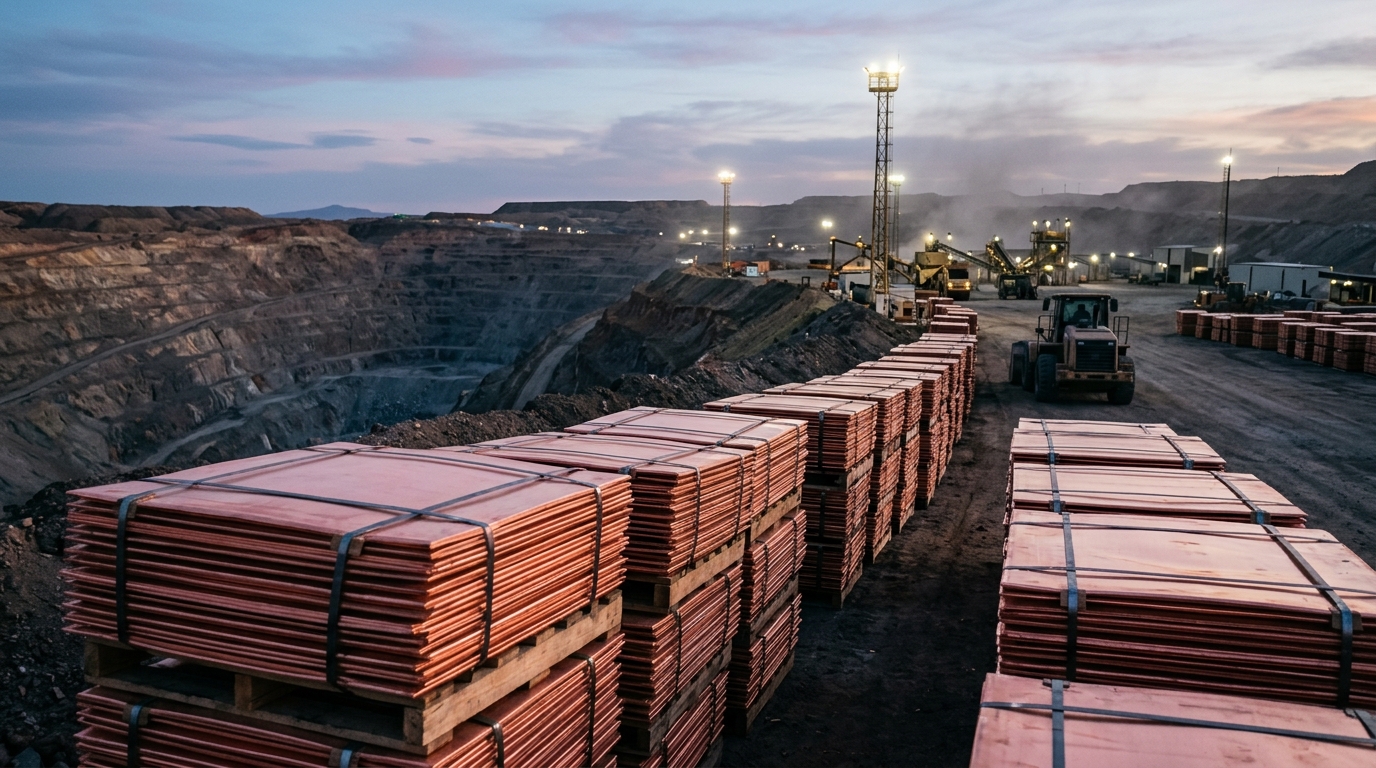
Cash copper settled at a record $14,822 a tonne on Monday and $14,741 on Tuesday. In London, three-month copper climbed as far as $14,700 before easing to $14,532, while LME inventories fell for seven straight sessions to 229,650 tonnes. As of October 13, copper stood at about $6.72 per pound. Banks lifted their full-year forecasts the same day. The question now is not whether copper is expensive. It is whether the companies that sit on the largest deposits in the ground can convert today’s price into a decade of compounding returns.
Why This Metal Is Different
AI-oriented facilities require significantly more copper per megawatt of capacity to handle increased power distribution and advanced cooling needs. A 100-megawatt hyperscale data center is often estimated to require on the order of 4,700 tonnes of copper for wiring and cooling systems. That figure cannot be engineered away. Aluminum conducts, but not well enough. Fiber transmits data, not power. Copper moves electricity at scale, and there is no substitute at the densities modern AI infrastructure demands.
CRU’s Summer 2026 Metals Market Outlook forecasts AI data centers will consume 682,000 tonnes of copper, representing a 138% increase compared with the organization’s 2024 forecast. Wood Mackenzie expects AI electricity requirements alone to drive copper demand for grid infrastructure to 1.1 million tonnes per annum by 2030. New mines, meanwhile, take an average of 17 years to permit and build. Supply cannot sprint to meet this demand.
Which Miners Own Decades of It
Southern Copper Corporation holds the world’s largest copper reserves among publicly traded mining companies, with proven and probable reserves exceeding 40 million tonnes of copper, and operates open-pit and underground mines across Mexico and Peru, supported by wholly owned smelting and refining facilities. SCCO generated net cash from operating activities of $1.69 billion in the first quarter of 2026 alone, up 135% from the prior-year quarter. Consensus estimates for SCCO’s 2026 sales and EPS imply year-over-year growth of 29.4% and 49.4%, respectively. Few industrial businesses of this size grow earnings that fast.
Freeport-McMoRan’s Grasberg complex in Indonesia is the other asset that disciplined investors keep returning to. FCX has identified an opportunity to more than double the concentrator capacity of its Bagdad operation in Arizona, where reserve life currently exceeds 80 years. Studies indicate the potential to increase copper production by 200 to 250 million pounds per year from that site alone. Antofagasta, the London-listed pure-play Chilean miner, operates four mines in Chile, and 2026 production guidance is 625,000 to 655,000 tonnes of copper. The company is expanding its production capacity with the goal of increasing output by about 30% by the end of the decade.
The Tariff Distortion and the Bear Case
There is an honest risk the bulls should sit with. Copper pulled back from a three-week high on Wednesday after US inflation data put a Federal Reserve rate hike back on the table, and word of a preliminary deal to avert a strike at BHP’s Escondida took some of the supply premium out of the price. More structurally, Macquarie’s collapse scenario requires Washington to rule tariffs out entirely, which it rates the least likely outcome, but notes that large volumes of US copper could stay frozen in American warehouses past January 1. A tariff resolution that returns that metal to global markets could pressure LME prices sharply. The COMEX contract’s record settlement of about $6.89 came a day before a Reuters report that the White House tariff plan had stalled knocked about 5% off the price. Volatility in both directions is a feature of this market, not an aberration.
The Long-Term Verdict
Macquarie now has copper averaging $13,573 for the full year, BMO Capital Markets $13,619, and BMI, a unit of Fitch Solutions, $13,500. Deutsche Bank believes copper could make another attempt at the record high in the near term, while Citi sees $15,000 within twelve months. A tariff unwind is the sharpest near-term risk. But the structural demand from AI infrastructure, power grids, and energy transition is not going away. Investors who own the miners with the largest, lowest-cost reserves are positioned to benefit from that demand regardless of which tariff outcome lands in Washington. The noise around LME spreads and policy limbo is real. The copper underneath those miners’ feet is more so.