
Most midterm election positioning right now involves large, blunt instruments: rotating into defense ETFs, trimming healthcare exposure, watching bank stocks for a divided-Congress bid. That playbook is serviceable. It is also crowded and largely priced in. The more interesting question is which company has a specific legislative date on the calendar that changes its income statement, not just its multiple.
That company is Coinbase. That date is September 15.
Why This Stock Now
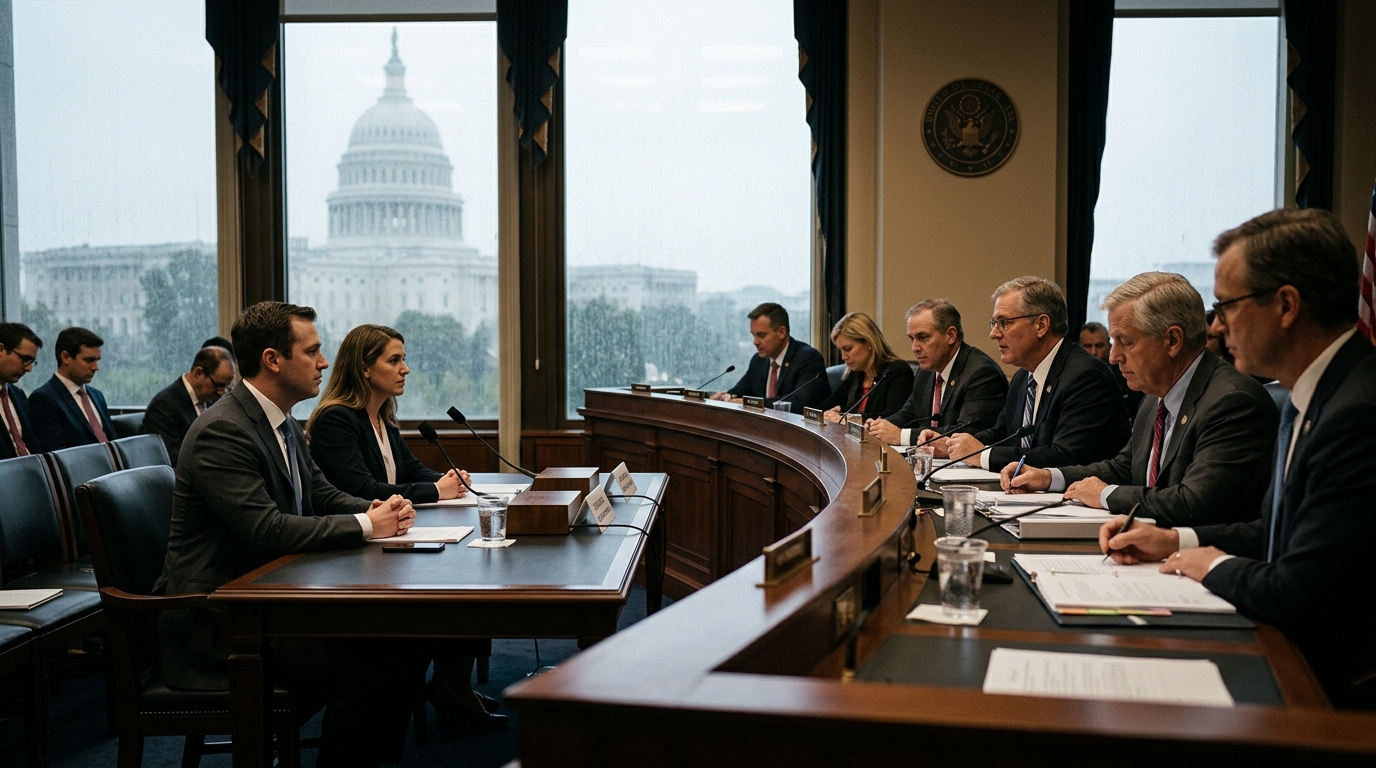
In early August, Senate Majority Leader John Thune filed cloture on the motion to proceed to H.R. 3633, the Digital Asset Market Clarity Act, before Congress left for recess. The procedural vote is scheduled to ripen on September 15, a cloture vote on the motion to proceed that requires 60 votes to overcome a filibuster and allow the Senate to formally begin debating the bill. That is not yet passage. But failure on September 15 would likely stall the bill for the remainder of 2026, and the market already knows it. The math after recess gets tighter: senators return September 14 with limited floor days before midterm campaigning pulls attention away.
Prediction markets have been volatile on the bill’s odds. Galaxy Research has publicly flagged Senate calendar constraints and has moved its 2026 passage odds over time, but the exact swing described here is not something I can verify. Polymarket pricing has also moved around this month, but the specific levels and percent change cited here are not something I can verify. A successful cloture vote would not just send the bill forward. It would shift those odds sharply and pull forward the institutional capital that has been sitting on the sidelines waiting for regulatory certainty.
The Business Case Is Already Built
This is not a speculative story about a company that might benefit from regulation someday. Coinbase’s stablecoin revenue is a functioning line item that grows directly when USDC adoption expands, and USDC adoption expands when legal clarity removes institutional hesitation. Stablecoin revenue of $305 million in Q1 2026 was the largest single component of subscription and services revenue, driven by USDC market capitalization growth and an all-time high average USDC balance of $19 billion held in Coinbase products.
Coinbase captures approximately 50% of total USDC economics through its revenue-sharing arrangement with Circle for off-platform USDC, and it keeps the economics for USDC held on Coinbase products. That arrangement means every dollar of new USDC circulation flowing from institutional adoption can land in Coinbase’s recurring revenue, not into a trading fee line that evaporates when volatility disappears. Subscription and services revenue reached $584 million in Q1 2026, representing 44% of total net revenue. The business mix is genuinely changing.
What the Midterm Context Adds
A divided Congress may favor defense, technology, and financial services while increasing scrutiny for energy, healthcare, and private equity. Morgan Stanley’s framework is useful for sector rotation, but it misses a sharper edge: crypto regulation is one of the few issues where a specific Senate vote before November 3 could either crystallize or stall a legislative cycle. There is real pressure to move the bill before the November 3, 2026 midterms, which could change the Senate’s makeup.
Americans are now almost evenly split over which party they most agree with on economic policies: 37% say Democrats, while 36% say Republicans. That near-tie matters because neither party can afford to look anti-innovation heading into a knife-edge House race. Republicans hold 220 seats to Democrats’ 215, and that count has been described by multiple outlets as the narrowest House margin since 1930. That political arithmetic is exactly why the White House has been unusually public in its support. President Trump hosted cryptocurrency executives at the White House, including Coinbase CEO Brian Armstrong, and urged Congress to pass the CLARITY Act.
What Could Go Wrong
The risks are real and specific. Some Democrats have pressed for stronger ethics and conflict-of-interest provisions, and banking trade groups have raised concerns about how stablecoin and market-structure legislation could affect the traditional banking system. Sixty votes is a high bar. If the cloture vote fails, the stock loses its near-term catalyst and the regulatory overhang that has weighed on COIN all year reasserts itself.
There is also the OCC dimension. The OCC’s February 2026 GENIUS Act proposed rule addresses arrangements designed to route yield or interest to stablecoin holders through affiliates or related third parties, and signals the agency could treat those structures as evasion of the law’s yield and interest ban. That could pressure parts of the broader stablecoin rewards ecosystem, but it is too strong to say it would automatically gut the Coinbase-Circle revenue model as written here. If the CLARITY Act passes but final implementing rules tighten the yield structure, the earnings uplift is smaller than bulls expect.
The Bottom Line
Q2 2026 saw Coinbase deliver its third straight all-time high in crypto trading volume market share at 10.3%, alongside its 14th consecutive quarter of positive adjusted EBITDA. The operational foundation is solid. Major Wall Street firms trimmed price targets but largely kept Buy or Overweight ratings, citing short-term weak volumes but long-term strength in services, regulation, and cost control.
The generic midterm trade involves buying an ETF and waiting for November. The COIN opportunity is tighter: a single procedural vote on September 15 that the market is still treating as a low-probability path to a 2026 law. If that probability shifts materially higher, the stock’s reaction will be faster and larger than any sector rotation the election itself could produce. Position sizing should reflect the binary nature of the catalyst, but the asymmetry here is not available in defense or financials.