
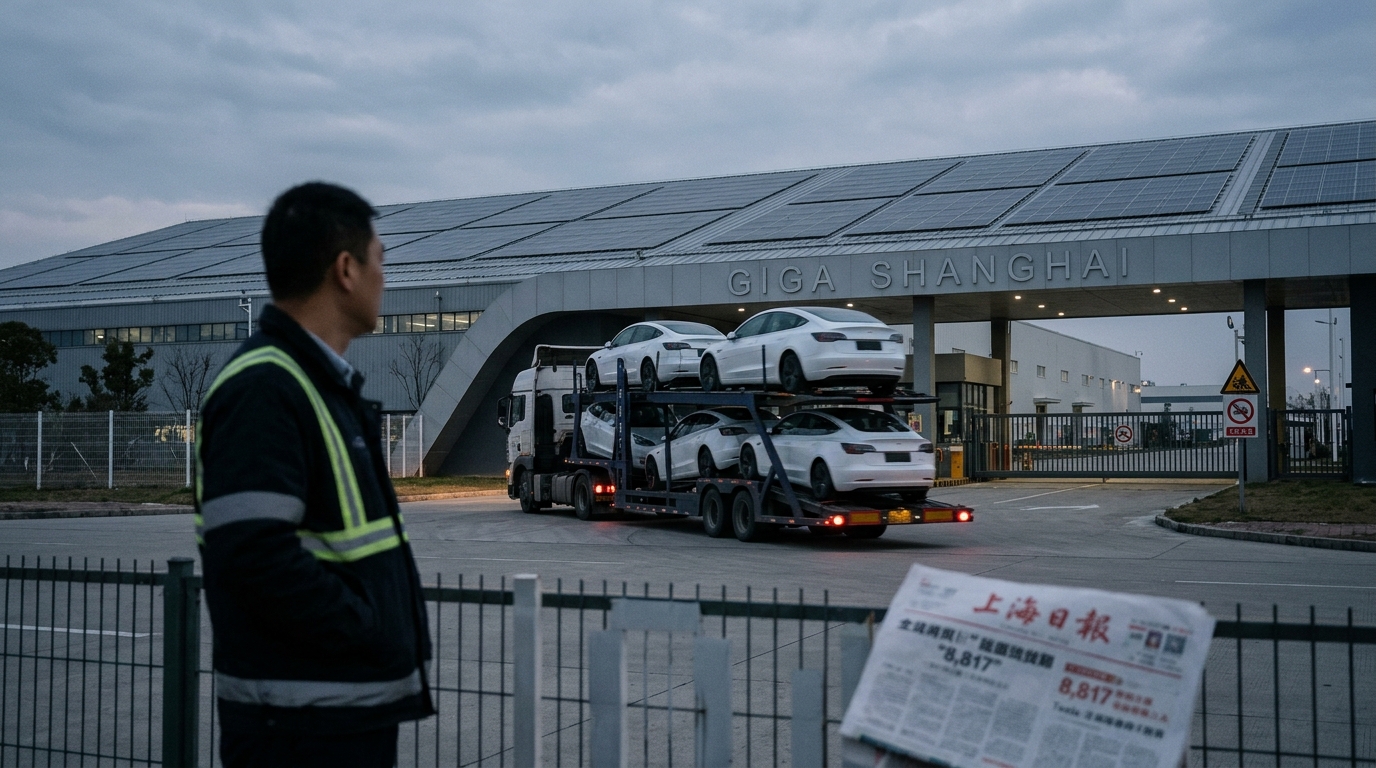
There are two ways to read Tesla’s October numbers out of China, and only one of them is comfortable.
The China Passenger Car Association recorded 67,829 wholesale vehicles from Giga Shanghai in October, up 10.3% year over year. But 59,012 of those were exports, leaving just 8,817 cars for the domestic market the factory was originally built to serve. That figure is Tesla’s worst month in China since July 2022. The comfortable read is that the factory is busy. The honest read is that China, the world’s largest EV arena, has largely moved on.
The Bigger Trend
Comparing October results alone, domestic retail sales fell from 40,485 in 2024 and 26,006 in 2025 to 8,817 this year. That is not a bad quarter or a timing quirk. Tesla typically prioritizes export orders early in each quarter and domestic deliveries toward the end, and September promotions may bring some demand forward, but multiple outlets have noted those patterns do not account for the size of October’s decline.
BYD continued to lead China’s NEV market in October with a 22.4% share, while Tesla dropped out of the top 10 after ranking fourth in September. Tesla’s share of China’s NEV retail market was about 0.8%. Xpeng, meanwhile, posted record monthly deliveries in October. The ground underneath Tesla in China is not just shifting; competitors are paving it.
The Investment Case
None of this would matter quite so much if Tesla were priced as a car company. It is not. Most of Tesla’s valuation rests on autonomy and robotics, which do not yet report meaningful revenue, and the stock has traded around roughly 400 times trailing earnings in November. TSLA fell to $379.74 on November 16, with investors also weighing the Cybercab’s $299 monthly autonomy subscription.
Morgan Stanley analyst Andrew Percoco has said the autonomous taxi business accounts for about $120 of his $400 price target on Tesla, and Bank of America previously estimated an $844 billion value for a robotaxi business in a blue-sky scenario, which would be a substantial share of Tesla’s market value. Musk said Robotaxi revenue would be “noticeable probably in Q2” of next year, and Tesla’s CFO suggested it could become “a significant part of our revenue and profitability in ’27.” That may well be true. The China retail data is a reminder of the gap between may and is.
Building Wealth Around This Idea
Long-term investors in Tesla are essentially holding two companies at once: a maturing EV manufacturer losing ground in its most important overseas market, and an autonomy and robotics platform that has yet to produce revenue at scale. The honest wealth-building question is whether you are being paid to wait.
Musk has said Tesla is ending Cybertruck production to free up factory capacity for the Cybercab robotaxi program, putting autonomous mobility and software-heavy services firmly in the spotlight. That is a meaningful strategic commitment. But how much of Tesla’s current valuation relies on the success of its robotaxi service is debatable, and there is no doubt that scaling and monetizing robotaxis is a must for the valuation to be justified long term.
Risks to Monitor
The China deterioration is structural, not seasonal. Tesla also slipped from fifth to seventh in the year-to-date China sales rankings, with about 389,905 NEVs sold from January through October, down 15.0% from the same period last year. Every month that domestic China share erodes makes the automotive base thinner, raising the bar for Cybercab to compensate. Regulatory approval timelines, camera-only autonomy questions, and Waymo’s expanding footprint are additional variables that sit outside Tesla’s direct control.
Daily Wealth Takeaway
The most durable investing lesson here is straightforward: a company’s current business and its future optionality are not the same thing, and the market will price both simultaneously. Tesla’s China retail sales are a live stress test of that gap. When the present-day numbers weaken while the future-value assumptions hold firm, the valuation math demands that the future arrive on schedule. It rarely does. Position size accordingly.