
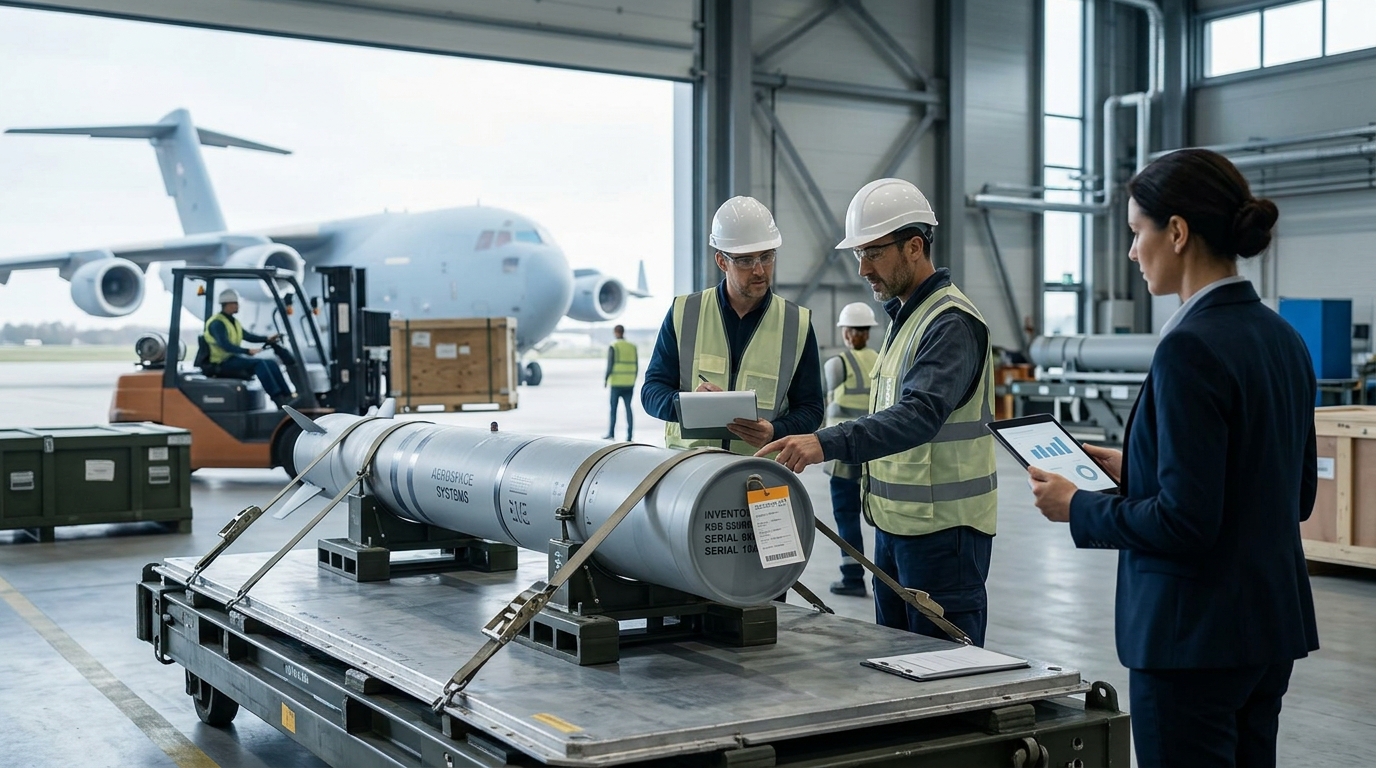
The Center for Strategic and International Studies (CSIS) estimates the US has expended up to 61% of its prewar Patriot interceptor inventory in the Iran conflict, entering 2026 with roughly 2,300 interceptors and burning between 1,050 and 1,430 of them. THAAD fared worse: CSIS puts the prewar stock at around 355 interceptors, with 190 to 290 used, or roughly 82% expended, with no replenishments anticipated in fiscal 2026. RTX, Northrop Grumman, and Lockheed Martin manufacture most of this inventory. And yet, heading into their Q3 reports Tuesday and Thursday, all three still trade well below the all-time highs they set on the day the war started in March.
The War and the Waterway
Dozens of ships were attacked in or near the Strait of Hormuz in October, but the specific weekly tally in the draft is too high for what has been publicly corroborated. The Associated Press, citing the UK Maritime Trade Operations centre, reported 10 attacks in the week ending Friday, October 16, 2026, and noted UKMTO has said it is struggling to accurately report the true number because many ships now refuse to report incidents.
The draft also cites a precise seven-day oil-flow figure and a named vessel loss attributed to CENTCOM. I could not verify those details as stated. Recent public reporting has described sharply reduced flows and multiple attacks, including a ship sinking, but the sourcing in the draft does not match what is clearly attributable in open reporting.
The conflict is not winding down. It is intensifying.
That should be unambiguously good for defense primes. It is not that simple.
The Bull Case: Backlogs That Dwarf Anything in Recent Memory
RTX’s Q2 backlog hit $289 billion, and on its Q2 call the company said the Raytheon segment posted a book-to-bill of 2.42. Replenishment is already flowing through the order book. Reuters reported October 8, 2026 that RTX’s Raytheon won a multi-year US military contract worth up to $6.3 billion to produce and sustain Standard Missile-3 Block IB interceptors as the Pentagon rebuilds missile-defense inventories. Separately, RTX disclosed the US Army awarded Raytheon a $441.6 million contract for newly manufactured PAC-2 GEM-T Patriot interceptors, described as the first such order in more than 30 years.
Lockheed’s position is comparably strong. In its Q2 2026 release, the company reported a record $230 billion backlog and explicitly included a multi-year contract to produce THAAD interceptors. Lockheed also said earlier this year it signed a framework agreement with the US government that would quadruple THAAD interceptor production capacity from 96 to 400 interceptors per year. Northrop raised its 2026 sales guidance to $43.75 to $44.25 billion in its Q2 2026 materials.
The Bear Case: Contracts Don’t Turn Into Cash Immediately
This is where sophisticated investors keep getting hurt. Fixed-price contract exposure is real. Lockheed’s Q1 2026 results showed EPS of $6.44, and the company attributed part of the Aeronautics profit pressure to an unfavorable $125 million adjustment tied to the F-16 program, alongside other program-related headwinds. Analyst previews regularly point to persistent supply chain bottlenecks and component shortages as critical hurdles limiting manufacturing capacity, while slower F-35 handoff rates and reach-forward cost adjustments on fixed-price government contracts can drag on segment margin expansion.
The replenishment timeline compounds the problem. CSIS has said rebuilding inventories of several key munitions will take years. CSIS has also pointed to reporting, including The Wall Street Journal, that Tomahawk expenditures exceeded 1,000, and public coverage of the CSIS analysis has said full replenishment could extend to late 2030. Separately, CBS News reported that Patriot PAC-3 interceptor orders have an average delivery time of three and a half years. The demand is structural. The supply-side scaling is not fast.
What the Numbers Say This Week
RTX reports Tuesday. Street consensus going into the week clustered around roughly $24 billion of revenue and about $1.78 of EPS, depending on the data source and timing of updates. Northrop follows the same morning, with consensus around $7.18 per share on roughly $11.1 billion in revenue. Lockheed reports Thursday, and consensus has clustered around roughly $20.5 billion in revenue for the quarter, with EPS estimates varying by provider and update timing.
What Investors Are Missing
The shares haven’t fully recovered from their March highs because institutional investors are doing the math on conversion, not just awards. Orders are real; cash flow timing is the argument. RTX is the cleaner story here. In its Q2 2026 materials, the company raised its full-year free cash flow guidance to $8.50 to $8.75 billion, with the commercial aerospace segment at Pratt and Collins providing a buffer no pure-play defense company has. Lockheed and Northrop carry heavier fixed-price exposure and longer THAAD and B-21 ramp timelines. The gap between backlog and margin realization is exactly the gap between where these stocks should trade and where they do.
Stocks to Watch
RTX is the prime with the broadest cushion: commercial aerospace revenue offsets defense execution risk, and the company has highlighted unusually heavy awards and elevated defense demand tied to munitions and missile defense. Lockheed Martin carries the most leverage to a THAAD and PAC-3 ramp but also the most fixed-price risk ahead. Tuesday’s Northrop report matters beyond NOC itself: on its Q2 call, management said second-half margin rates were expected to improve to over 11%, excluding estimates at completion tied to its missile prime investments, and any miss on that figure will reset expectations across the sector before Lockheed’s Thursday open. General Dynamics reports later in the cycle and deserves a second look if RTX and Northrop confirm that munitions cash is converting faster than consensus models.