
AWS just posted its fastest revenue growth in nearly five years, and Amazon rewarded investors by disclosing it has quietly arranged a way to borrow up to $80 billion with the hardware as collateral. That sequencing matters.
Amazon can borrow up to about $80 billion against technology infrastructure it buys, under a new secured loan facility disclosed in its 10-Q for the quarter ended September 30, 2026. The company can draw on the money from Q1 2027 through Q3 2028, and lenders get collateral rights over certain purchased assets linked to the facility, though the filing does not specify which assets. The Information first reported the disclosure on October 30; Bloomberg followed within hours.
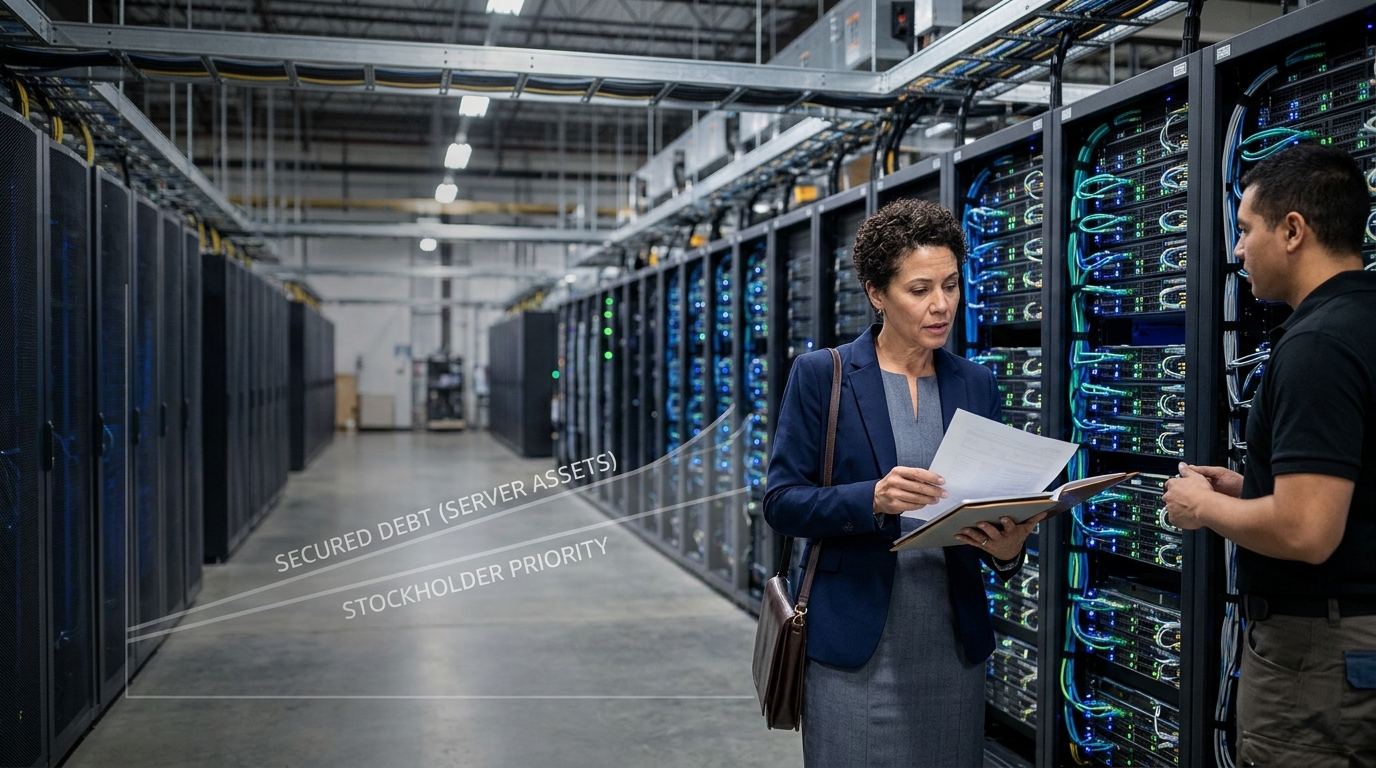
The structure is new for Amazon. The company has primarily funded data center construction and chip purchases through cash generated from its cloud-computing and retail businesses, along with large corporate bond issuance, and had previously not leaned on the kind of bespoke financing structures increasingly discussed around AI infrastructure. This facility crosses that line. It is secured debt, and the collateral is the AI infrastructure itself.
Why Amazon Needs Another Lever
The cash flow math explains the urgency. Amazon reported trailing twelve-month free cash flow of minus $42.4 billion for the 12 months ended September 30, 2026. Long-term debt rose from $65.6 billion at December 31, 2025 to $173.1 billion by September 30, 2026, as cash capital expenditures head toward about $220 billion this year. Total contractual commitments reached $883.6 billion at the end of September, up from $649.7 billion three months earlier, and more than double the level at September 30, 2025.
AWS revenue grew 39.3% to $46.0 billion in Q3, its fastest growth in almost five years, and it now drives about 63% of Amazon’s operating profit. That is the bull case in one line. The bear case is in the balance sheet: you cannot spend roughly $211 billion in trailing twelve-month capex while generating $168 billion in operating cash flow without finding additional funding sources. The supplier facility is one of those sources.
What Secured Means for Shareholders
This is the part most coverage has glossed over. Under the arrangement, lenders receive collateral rights over certain assets linked to the facility. When a company pledges assets to lenders, those lenders move ahead of equity holders in a stress scenario. Amazon is not in distress, but the structural shift is real: long-term debt has surged alongside a historically heavy capital expenditure cycle, which changes how leverage shows up in the risk profile.
The facility follows what has been described as Microsoft’s $25 billion bond offering and Meta’s recent mix of common stock and mandatory convertible preferred stock offerings, as the hyperscalers race to finance the same AI infrastructure arms race. Each has chosen a different instrument. Amazon chose collateralized supplier financing, which can be cheaper than unsecured bonds but subordinates the underlying hardware to lender claims.
Bull Case, Bear Case
The bull argument is straightforward: Amazon’s CEO said AWS projected revenue growth rates of over 40% both in 2027 and in 2028, and a company growing its cloud business at that pace can service significant debt. The hardware being pledged will generate revenue long before the facility’s draw period ends in Q3 2028.
The bear argument is about what happens if growth slows. Management reiterated that 2026 cash capital expenditures are expected to be approximately $220 billion, driven by continued investment in AI and cloud infrastructure and higher component costs. Higher component costs mean Nvidia and its peers remain pricing-power beneficiaries while Amazon absorbs the bill. If AWS growth decelerates before depreciation peaks, the debt load will weigh on margins precisely when investors expect the payoff.
What to Watch
Three things will determine whether this facility looks brilliant or reckless by the end of 2027. First, whether AWS can sustain growth above 40% as management has projected. Second, whether Amazon specifies which assets are pledged, a detail the current filing omits. Third, whether rivals match the structure or find cheaper alternatives, which would signal that collateralized supplier financing is becoming the industry standard rather than a one-off move.
Amazon is betting that the revenue from the infrastructure it is pledging will dwarf the cost of the debt used to build it. That bet has worked before. The difference this time is that the lenders now have a claim on the chips.