
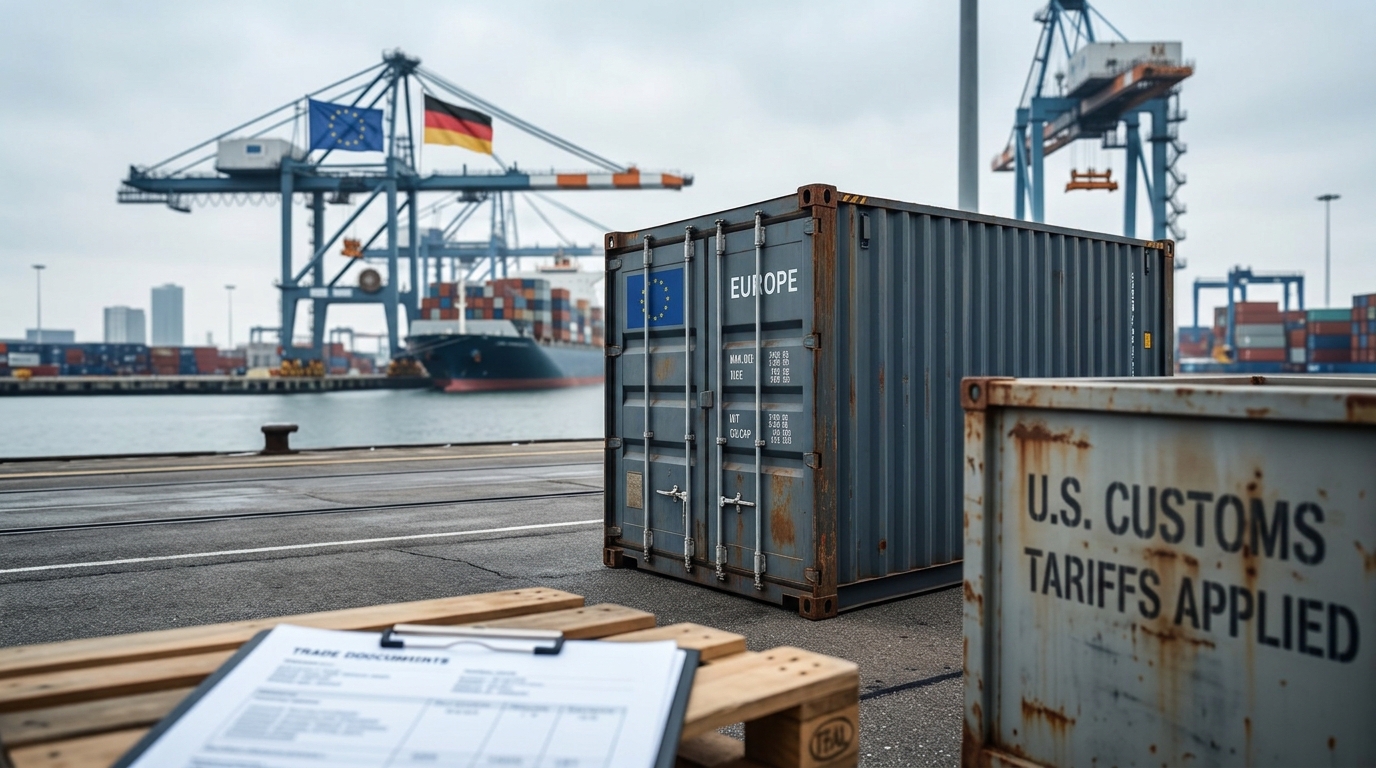
Washington named 14 economies in a sweeping tariff proposal Wednesday and European stocks closed sharply higher Thursday. That apparent contradiction is the most informative thing the market told us this week.
The Office of the United States Trade Representative determined that the acts, policies, and practices of 14 economies relating to structural excess capacity and production in manufacturing sectors are unreasonable and burden or restrict U.S. commerce, proposing economy-specific additional tariffs ranging from 15% to 35%. The list reads like a who’s-who of U.S. trading relationships: Bangladesh, Cambodia, China, the EU, India, Indonesia, Japan, Korea, Malaysia, Singapore, Switzerland, Taiwan, Thailand, and Vietnam.
So why did European shares jump? Because investors read the fine print faster than the headline.
What Actually Moved
The continent-wide STOXX 600 was up about 1.4% in early trading Thursday, with most regional indexes also higher. Germany’s DAX and France’s CAC 40 rose around 1.7% and 1.6%, respectively. Heavyweight banks provided a big boost, with Deutsche Bank up about 3% and Standard Chartered up about 2.5%. Technology shares also climbed, with Soitec and Infineon Technologies among the top performers, up roughly 4% each.
The two sectors had led the selloff on Wednesday, which pushed the STOXX 600 down more than 1%, as investors worried about U.S. inflation, higher interest rates, renewed trade uncertainty, and the outlook for AI-driven growth. Thursday’s rally was therefore partly a snap-back. But the tariff structure itself did genuine work.
Why It Happened
The critical detail is what these new duties do not do. According to Associated Press reporting, the proposed overcapacity tariffs would not stack on top of the 10% to 12.5% forced-labor tariffs announced in July for 60 trading partners. For European manufacturers who had already absorbed the July levies, that is real relief. The new rate replaces, rather than compounds.
Sentiment improved as investors took comfort from signs that proposed U.S. tariffs could prove less severe than feared, with duties on the European Union proposed at 15% in the notice. And because these are proposed actions with a comment and hearing process ahead, final rates and effective dates are still in flux, giving exporters time to prepare.
What the Market May Be Missing
The relief trade is understandable. It may also be premature.
The announcement is a notice of proposed action, not tariffs going into effect. USTR says written comments are due by January 5, 2027, and hearings begin January 25, 2027. Six weeks of lobbying from 14 governments, their industry groups, and U.S. importers who depend on these supply chains can reshape a final rule considerably. The rates investors are pricing today may bear little resemblance to the rates that eventually land.
There is also a meaningful carve-out that markets seem to be overlooking on the Chinese side. The draft materials circulating with these Section 301 notices indicate that China’s proposed overcapacity duties can stack with existing Section 301 tariffs, which can leave Chinese-covered goods facing materially higher total rates than Europe. That is a different situation than the one European companies face, and the distinction matters for any supply-chain analysis that runs through China.
Where It Shows Up
The divergence in treatment creates clear sector exposure. European capital goods exporters, automakers, and semiconductor equipment companies with U.S. revenue benefit directly from non-stacking treatment and the runway before implementation. The rally in Infineon and Soitec reflects exactly that logic.
Southeast Asian manufacturers face a different picture. Vietnam sits at the top of the proposed schedule at 35%, and Singapore is among economies facing a proposed rate as high as 20%. The proposals also include lower-rate pathways for some economies if consultations and commitments satisfy USTR. That escalation clause is live risk.
Risks and Counterpoints
The bullish case for European equities rests on the assumption that 15% holds, that no-stacking survives the comment period, and that the implementation window allows orderly adjustment. All three are reasonable assumptions today. None is guaranteed.
Pushback from affected governments arrived quickly. Associated Press reported that China opposed the move, Singapore said it was “very disappointed,” and Japan objected to being included. Coordinated opposition from multiple economies can slow or complicate a final determination, but it rarely reverses one.
The bullish counterpoint is that USTR structured these proposals with bilateral deal incentives baked in. Alternate lower rates are available if the trading partner negotiates an agreement with the U.S. That architecture suggests the administration views these tariffs as leverage for deals, not as permanent barriers. Markets reading them as mild may be right for the wrong reason.
What to Watch Next
The comment deadline of January 5 and the public hearings beginning January 25 are the two gates that matter. Any signal that USTR is raising rates, adding stacking provisions, or narrowing exemption lists during the comment period would quickly undercut Thursday’s optimism. Watch the EU’s formal response and whether it treats last year’s 15% figure as a binding ceiling or merely a starting point. The gap between those two positions is where the real trade lives.